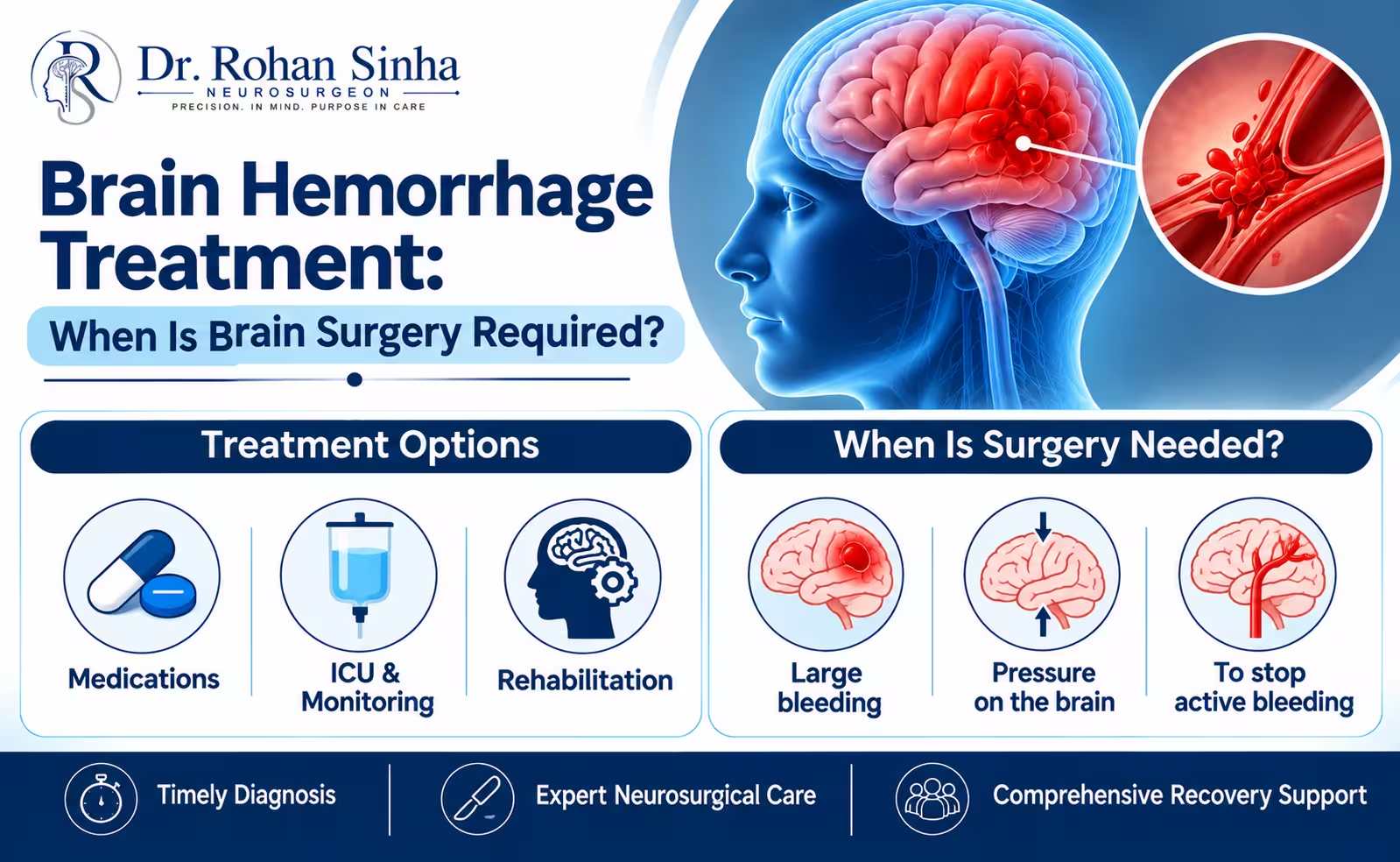
Brain surgery is not required for every brain hemorrhage; many small or moderate bleeds are managed conservatively in an intensive care unit (ICU) with medication and close monitoring.
What Is a Brain Hemorrhage?
Brain hemorrhage happens when a blood vessel within the brain or near the brain starts leaking, causing blood leakage into regions where it does not belong. Brain hemorrhage can cause damage to the brain tissues due to the blood pressure buildup.
There are two possible scenarios in which brain hemorrhage can occur: either within the brain tissues or near the brain. It is one type of hemorrhagic stroke.
What Are the Common Brain Hemorrhage Causes?
Various illnesses and injuries have the potential to injure the blood vessels and cause brain hemorrhage. Common brain hemorrhage causes include:
-
High Blood Pressure: High blood pressure causes weakening of the blood vessel walls, making it possible for them to rupture.
-
Head Injuries: Trauma and accidents may injure the blood vessels, resulting in brain hemorrhage.
-
Brain Aneurysm: This is the weakening and bulging of the blood vessels and may result in rupture and hemorrhage.
-
Arteriovenous Malformations: This is the abnormal formation of connections of arteries and veins and may cause a bleed.
-
Anticoagulation Medicine: There are some medicines that prevent blood from clotting and can cause hemorrhage.
-
Blood Coagulation Disorder: These are illnesses which affect the coagulation of blood.
Understanding the underlying cause of the brain hemorrhage is essential as it helps in determining the best mode of treatment.
What Are the Warning Signs and Symptoms of a Brain Hemorrhage?
Symptoms depend on where and how much bleeding occurs. Symptoms often appear suddenly and may get worse.
Some of the signs to look for:
-
Sudden severe headache
-
Nausea, vomiting
-
Weakness or numbness on one side of the body
-
Trouble speaking or understanding speech
-
Blurred or double vision
-
Seizures
-
Loss of balance or coordination
-
Confusion
-
Unusual drowsiness
-
Inability to be roused or unconscious
Important: A brain hemorrhage is considered a medical emergency if someone is exhibiting the signs above.
How Is a Brain Hemorrhage Diagnosed?
Early diagnosis is helpful in determining the location and severity of bleeding. Bleeding diagnoses are complicated by the presence of multiple symptoms and signs, and diagnostic tests vary according to the involved areas.
Some of the tests are:
-
CT Scan: It is the first choice of test to localize the bleeding in the brain and is usually done in emergency settings.
-
MRI Scan: It helps to evaluate brain tissues in detail and can help in characterizing different brain abnormalities.
-
CT Angiography or Cerebral Angiography: These tests are done to evaluate abnormal blood vessels and aneurysms.
-
Blood Tests: These help to evaluate coagulation parameters and other hematologic and medical parameters.
The results of the tests help in planning the management strategies (medical or surgical).
What Are the Brain Hemorrhage Treatment Options?
The treatment for brain hemorrhage depends on the size, location, severity, and cause of the bleed, and the patient's health.
In general, there are two options for treatment. One is called medical management, and the other is surgical treatment.
1. Medical Management
There are brain hemorrhages that are managed medically. For these types of bleeds, the patient is managed in the intensive care unit or stroke unit and given medicines to lower blood pressure or control seizures.
Other forms of treatment may include:
-
Surgery to drain fluid that has accumulated in the brain
-
Elevating the head of the bed
-
Killing the blood clot
-
Giving medicine to lower blood pressure
-
Reversing the effects of blood thinning medicines
-
Other actions to treat increased pressure within the skull
2. Surgical Treatment
Severe bleeding that causes dangerous pressure to the brain will require surgery. The goal of surgery is to control the bleeding and treat its cause, remove clotted blood and relieve pressure.
When Is Brain Surgery Required for a Brain Hemorrhage?
Brain surgery is not always necessary. However, it may become necessary if a bleed threatens to interfere with normal brain function or if the bleed threatens to be life-ending or life-threatening.
Cases where a neurosurgeon may recommend surgery include:
-
Blood Collections: If a collection of blood puts pressure on brain tissue.
-
Increased Intracranial Pressure: If blood puts pressure on brain tissue and causes the brain to swell.
-
Neurological Status Deterioration: If a patient is losing consciousness or has other neurological symptoms of a worsening condition.
-
Hemorrhage in the Cerebellum: If blood puts pressure on the brainstem and blocks the flow of cerebrospinal fluid.
-
Ruptured Brain Aneurysm: If there is a risk of further bleeding.
-
Hematomas: If blood collects outside of the brain.
Surgery is often recommended if a neurosurgeon feels that the risks of surgery are outweighed by the benefits, and based on the condition of the patient and results of tests.
What Types of Brain Surgery Are Used to Treat Brain Hemorrhage?
Various surgical procedures may be performed to arrest bleeding at different locations.
-
Craniotomy: A part of the skull is removed to access the bleeding site and to drain the accumulated blood.
-
Craniectomy: A part of the skull is removed to allow the brain to expand and reduce the pressure and to give the brain edema a chance to resolve.
-
Burr Hole Surgery: The skull is drilled to remove the accumulated blood, most often used for management of subdural hematoma.
-
Aneurysm Clipping or Coiling: These procedures are performed to stop the further bleeding from a ruptured aneurysm, with clipping being a surgical procedure and coiling being a non-surgical procedure.
The choice of the procedure to stop bleeding is decided on the basis of the presentation of the patient.
Recovery After Brain Hemorrhage Treatment
Recovery is variable and dependent on where and how severe the brain bleeds are, treatment, and the brain injury.
Some patients fully recover with only minimal long-term problems, and others do not fully recover and may require rehabilitation.
Recovery may involve:
-
Improving strength and movement with therapy
-
Therapy to help perform daily tasks
-
Therapy to improve communication and swallowing
-
Regular neurological exams
-
Treating high blood pressure and other medical conditions
Following the doctor's recommendations and rehabilitation can help in the recovery process.
Related Treatments
Brain Hemorrhage Treatment: Consult Dr. Rohan Sinha
If you are looking for a Neurosurgeon in Noida, Dr. Rohan Sinha provides specialized care for brain, spine, and neurological conditions. With 20+ years of experience in neurosurgery and spine surgery and 10,000+ patients treated, he has experience in evaluating complex neurological conditions and planning appropriate treatment based on each patient's individual needs.
Brain hemorrhage is a serious condition, and the decision regarding surgery depends on factors such as the location and size of the bleeding, the underlying cause, brain pressure, imaging findings, and the patient's neurological condition. Dr. Rohan Sinha evaluates the available clinical and imaging information to help determine the appropriate treatment approach. In emergency situations involving suspected brain hemorrhage, immediate hospital evaluation should not be delayed.
Conclusion
Brain hemorrhage is a medical emergency that requires urgent diagnosis and treatment. Some patients can be treated with medication with careful observation. Others require surgery to remove the clot, reduce the pressure within the skull and treat the cause of bleeding. The decision on the treatment required is based on location and amount of bleeding and the patient’s neurological condition.
If you have a sudden severe headache, weakness, or if you have a seizure or lose consciousness, contact your nearest emergency service immediately. For expert advice and treatment of brain hemorrhage, consult Dr. Rohan Sinha, one of the best neurosurgeons and spine surgeons in Noida, for the best treatment and advice.
Frequently Asked Questions
1. What is the main cause of a brain hemorrhage?
Blood pressure that is uncontrolled and very high is one of the major causes of a brain hemorrhage. Other causes are head injuries, aneurysms, abnormal blood vessels, and blood clotting disorders.
2. Can brain hemorrhages be treated without the need for surgery?
Yes, some brain hemorrhages can be treated by means of different medicines and control of blood pressure. Brain surgery is considered if there is an increase in the pressure in the brain, or there is neurological deterioration.
3. Is surgery always needed for a brain hemorrhage?
No. Surgery is not needed in all cases.
4. How long is the expected recovery time after brain hemorrhage surgery?
The expected recovery time after brain surgery is very variable. Many patients take longer than 3-6 months to recover and may need continuing medical care.
5. Is it possible to fully recover after a brain hemorrhage?
This is possible in some cases, but it depends on how soon the appropriate treatments are initiated. Brain hemorrhage can be very damaging to the brain.