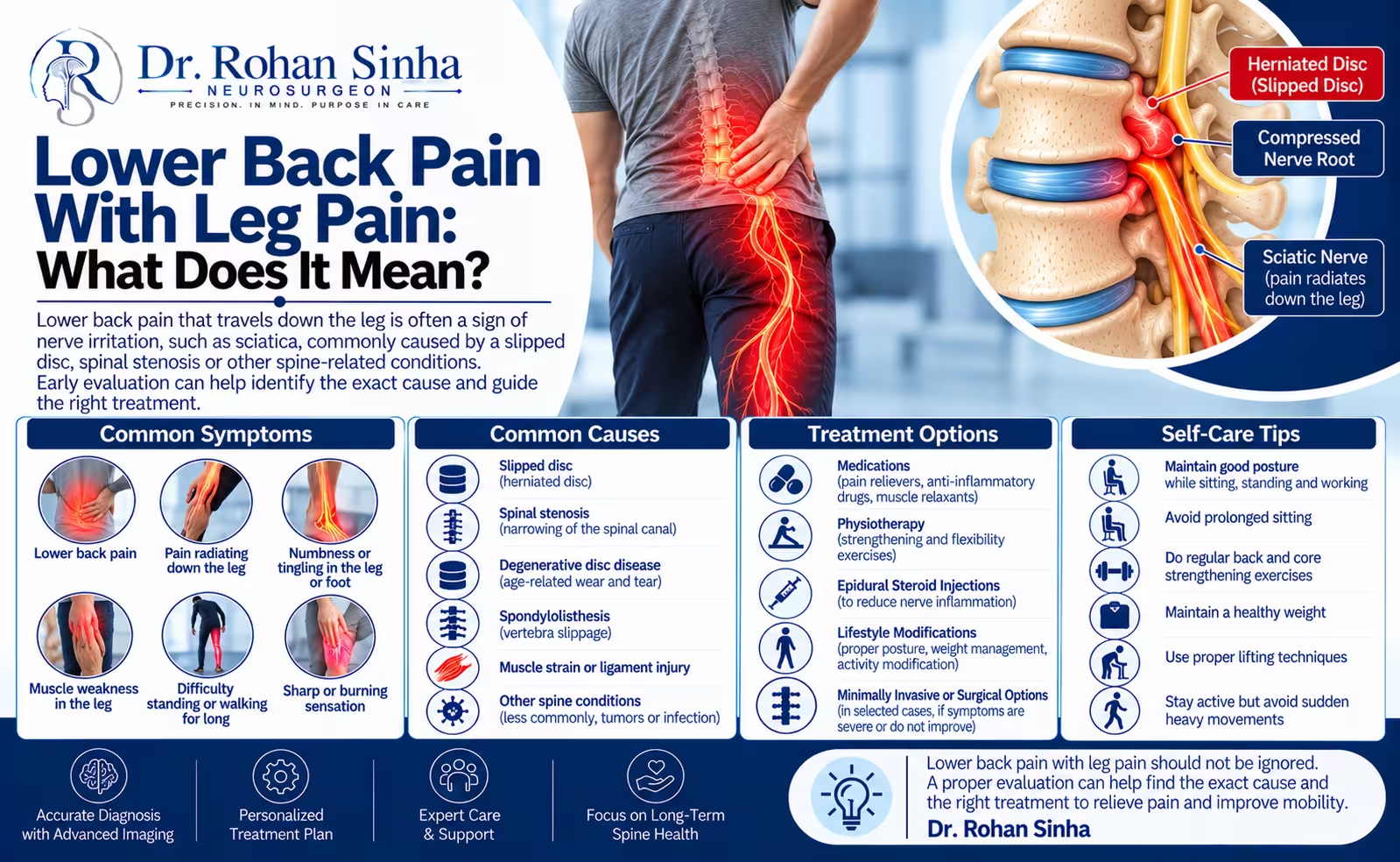
Lower back pain that radiates into the leg is commonly caused by irritation, inflammation, or compression of a nerve root in the lower spine, such as through Sciatica or lumbar radiculopathy.
What Causes Lower Back Pain With Leg Pain?
Lower back pain that extends into the leg can occur with irritation or compression of a nerve. Sciatica can cause this, but there are other possibilities.
Other causes may include:
-
Herniated disc: Pain may go down the leg from the disc pressing on the nerve.
-
Spinal Stenosis: Pain, weakness, and numbness may occur when the nerves are irritated, possibly with standing and walking.
-
Age-Related Changes: Changes may occur to the spinal discs and joints that may cause compression of a nerve.
-
Strained Muscle: Back pain may occur with stretching or tearing of the back muscles, but usually does not cause radicular symptoms.
-
Spondylolisthesis: One vertebra may slip out of position and press on a nerve root.
It is important to find the cause to provide the most appropriate treatment for the condition.
What Is Sciatic Nerve Pain?
The largest nerve in the body, the sciatic nerve, starts in the lower back and ends in the buttocks, running down each leg.
Pain affecting the sciatic nerve is often called sciatica. This can affect one side of the body, starting in the lower back and/or buttock and going down the back of the thigh and lower leg.
There are different descriptions of the pain, including sharp, burning, and electric shock sensations. Sciatica can also cause tingling and numbness, as well as weakness. In some cases, pain can be increased by movements like coughing or sneezing.
What Are the Common Sciatica Symptoms?
How severe sciatica symptoms are felt also varies from person to person. Some people may just have mild discomfort while others can’t walk, sit or sleep because of the pain.
Symptoms may include the following:
-
Pain running from the lower back or buttock and going down the leg
-
Burning or shooting pain
-
Tingling sensations or pins and needles
-
Numbness in the leg or foot
-
Weakness in the leg
Prolonged sitting, coughing or sneezing can worsen the symptoms. Sciatica can affect one or both legs and may alternate. Symptoms in both legs, especially with weakness and changes in the function of the bladder or bowel, should be medically assessed immediately.
How Is Sciatica Diagnosed?
A doctor is going to want to hear about your symptoms, when the pain started, and what movements make it worse. There will be a physical examination of your walking pattern, the strength of your muscles, your sensations, and your leg movements.
There are tests that can be performed based on your symptoms. An MRI, X-ray and other tests may be suggested and/or ordered. Imaging is not always necessary right away, but can be helpful if your symptoms persist and worsen and may suggest a more serious problem.
What Are the Best Options for Sciatica Pain Relief?
The most effective method of treatment for sciatica depends on the cause, severity of the symptoms and the impact on the quality of your life. Many patients can benefit from conservative treatment.
1. Medication for Pain Control
Your physician can prescribe appropriate pain relievers and anti-inflammatory medication. There could be other medications recommended in certain circumstances depending on your symptoms and health background. Do not use medication unless you make sure that it is right for you.
2. Physiotherapy and Guided Exercise
Physiotherapy will help you gain more flexibility, build muscle strength to support your spine and move comfortably. A physiotherapist might prescribe an appropriate stretching and exercise program for your case.
3. Hot and Cold Packs Application
Application of cold pack may relieve your pain in the early stages, while heat packs are helpful to relax your muscles. Use either for short periods of time through the layer of clothing.
4. Remaining Lightly Active
Even though some rest periods may provide relief in the case of intense pain, extended bed rest is not advised. Gently walking and moving around frequently can possibly keep you from becoming stiff. Stay away from heavy lifting and other activities that worsen your condition.
5. Spinal Injections
Spinal injections may be done by a medical professional if the pain persists even after the first treatments. They are usually only done temporarily and are not recommended for all patients.
6. Surgical Intervention Under Certain Conditions
If the pain does not decrease even after proper treatments, or if you have nerve damage, then surgery might be done. There are different kinds of surgeries depending on what causes the problem such as disc herniation or spinal stenosis. Most patients with sciatica do not need surgery.
What Are the Different Sciatica Therapies?
Sciatica therapies encompass various methods used to relieve the pain, restore movement, and correct the source of the problem.
Depending on your problem, a course of treatment may include:
-
Tailored exercise and strength training
-
Physical therapy
-
Medication for pain management
-
Application of heat or cold for temporary relief
-
Injections if recommended by a specialist
-
Surgery in case other methods prove to be ineffective
Not all types of therapies can suit everyone. Tailored therapy can help you control the symptoms without causing more harm to the already irritated nerve.
How Long Does Sciatica Take to Improve?
Most patients recover from sciatica in four to six weeks; however, the time taken to heal will differ. Mild sciatica takes shorter to heal whereas persistent nerve compression results in pain for many months.
In case the symptoms do not get better or become worse after a few weeks, then it is recommended that you see a doctor. This becomes all the more important if there is any muscle weakness or numbness.
When Should You Seek Medical Attention?
For those who experience back pain and pain in the leg that is accompanied by:
-
Inability to control one’s bowels or bladder
-
Inability to urinate
-
Numbness in the groin and insides of the thighs
-
Sudden severe weakness in the legs
-
Back pain after a major back injury
The above symptoms could be a sign of severe compression of the nerves and need immediate treatment.
Why Choose Dr. Rohan Sinha?
Lower back pain that travels into the leg can result from several conditions, including sciatica, herniated discs, and spinal stenosis. Identifying the cause is important for choosing an appropriate treatment plan.
Dr. Rohan Sinha focuses on the evaluation and management of neurological and spine-related conditions. Assessment may include reviewing symptoms, examining nerve function, and recommending appropriate diagnostic investigations when required. Treatment options are considered according to the patient's condition, symptom severity, and clinical findings.
If you are looking for the Spine Specialist in Noida, a specialist evaluation can help identify the cause of persistent lower back pain with leg pain and determine whether non-surgical treatment or further intervention may be appropriate.
Related Treatments
Depending on the diagnosis, relevant services offered by Dr. Rohan Sinha include:
Related Articles
Conclusion
Lower back pain that moves down the leg can be sciatica, a herniated disc or some other problem with the spine. A lot of people get better with the use of the appropriate medications and physical therapy. However, if pain and/or numbness get worse or weakness in the legs occurs, a visit to the doctor is in order. If the condition gets worse, it can affect the function of the nerves. This is why it is important to recognize the symptoms of these conditions early. Dr. Rohan Sinha is a spine and neurosurgeon in Noida who can diagnose your condition and offer treatments to alleviate your symptoms.