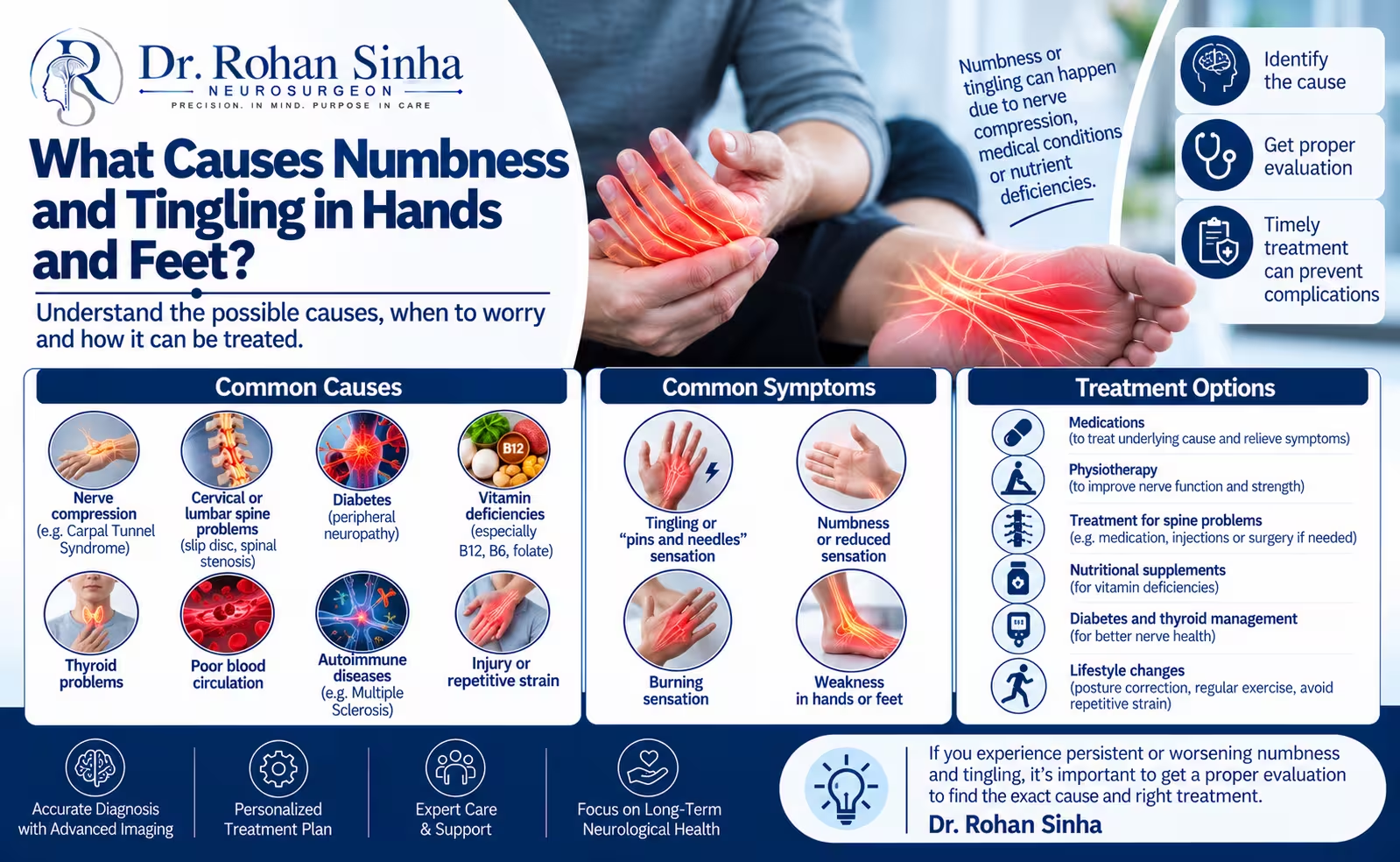
Numbness and tingling in the hands and feet, medically known as paresthesia, is often caused by temporary pressure on a nerve or poor blood flow, but chronic symptoms usually signal underlying nerve damage or disease.
What Do Numbness and Tingling Feel Like?
Numbness means reduced or complete loss of sensation in an area of the body. Tingling may feel like:
-
Pins and needles
-
Burning or prickling
-
An electric-shock-like sensation
-
Reduced sensitivity to touch
-
A hand or foot feeling as if it has “fallen asleep”
These sensations may affect one area or occur in both hands and feet.
What Causes Numbness and Tingling in Hands and Feet?
1. Nerve Compression
Pressure on a nerve can temporarily cause numbness or tingling. Sleeping on your arm, sitting in one position for too long, or putting pressure on a particular part of the body can affect nerve function.
Nerves can also become compressed because of problems involving the spine, such as a slipped or herniated disc.
2. Vitamin B12 Deficiency
Vitamin B12 plays an important role in maintaining healthy nerves. A deficiency can cause numbness, tingling, weakness, balance problems, and unusual sensations in the hands and feet.
If a deficiency is suspected, your doctor may recommend blood tests and appropriate supplementation.
3. Diabetes
High blood sugar over a long period can damage nerves, particularly those supplying the feet and legs. This condition is called diabetic peripheral neuropathy.
It may cause:
-
Burning or tingling
-
Numbness
-
Reduced sensation
-
Pain in the feet
-
Increased sensitivity to touch
People with diabetes should take persistent changes in sensation seriously.
4. Slip Disc or Herniated Disc
A slipped or herniated disc can irritate or compress nearby nerves. Depending on the location of the affected nerve, this may cause pain, tingling, numbness, or weakness in an arm or leg.
When symptoms travel from the lower back through the buttock and into the leg, they may be related to nerve irritation such as sciatica.
5. Peripheral Neuropathy
Peripheral neuropathy occurs when nerves outside the brain and spinal cord become damaged. Diabetes is one of the common causes, but nutritional deficiencies, certain medications, infections, alcohol use, and other medical conditions can also contribute.
Symptoms often begin in the feet and may later affect the hands.
6. Spinal Conditions
Certain spine conditions can put pressure on nerves and cause numbness or tingling. These may include spinal stenosis, degenerative disc disease, slipped discs, and other conditions affecting the spine.
The location and pattern of numbness can help a doctor determine which nerves may be involved.
7. Carpal Tunnel Syndrome
Carpal tunnel syndrome occurs when the median nerve is compressed at the wrist. It commonly causes numbness and tingling in the thumb, index finger, middle finger, and part of the ring finger.
Symptoms may become more noticeable at night or during activities that involve repetitive hand or wrist movements.
When Should You See a Doctor?
Occasional tingling that disappears quickly may not be serious. However, you should consider medical evaluation if numbness or tingling:
-
Keeps coming back
-
Persists for several days
-
Gradually becomes worse
-
Is associated with pain or weakness
-
Affects walking or balance
-
Causes difficulty using your hands
-
Spreads to other areas of the body
A doctor may assess your symptoms, medical history, muscle strength, reflexes, and sensation. Depending on the suspected cause, blood tests, nerve studies, or imaging such as an MRI may be recommended.
When Is Numbness an Emergency?
Sudden numbness or weakness, especially on one side of the body, can be a warning sign of a stroke and requires immediate medical attention.
Seek emergency care if numbness occurs suddenly along with:
-
Facial drooping
-
Difficulty speaking or understanding speech
-
Sudden weakness in an arm or leg
-
Severe dizziness or loss of balance
-
Sudden vision problems
-
A sudden, severe headache
Severe back pain accompanied by rapidly worsening leg weakness, loss of bladder or bowel control, or numbness around the inner thighs or genital area also requires urgent medical assessment.
How Is Numbness and Tingling Treated?
Treatment depends on the underlying cause. Managing diabetes, correcting vitamin deficiencies, treating nerve compression, or addressing a spinal condition may help reduce symptoms.
If nerve compression is related to a spinal problem, treatment may include medication, physiotherapy, lifestyle changes, or other appropriate interventions. Surgery is generally considered only in selected cases, particularly when there is significant nerve compression, persistent symptoms, or neurological weakness.
Why Choose Dr. Rohan Sinha?
Persistent numbness and tingling can have several possible causes, making proper evaluation important before deciding on treatment. Dr. Rohan Sinha focuses on the diagnosis and management of neurological and spine-related conditions that can affect nerve function.
His approach involves understanding the patient's symptoms, performing a detailed clinical evaluation, and using appropriate diagnostic investigations when required. For symptoms related to conditions such as slipped discs, herniated discs, sciatica, or spinal stenosis, treatment is planned according to the underlying cause and severity.
If you are experiencing persistent numbness or tingling and looking for a Best Neurosurgeon & Spine Specialist in Noida, timely evaluation can help identify the cause and determine the most appropriate treatment approach.
Related Treatments
Depending on the underlying cause, relevant treatments may include:
Related Articles
- Lower Back Pain: Common Causes and Treatment Options
- Brain Tumor Symptoms: 10 Early Warning Signs
- When Does a Brain Tumor Require Surgery?
- L4-L5 Slip Disc: Symptoms and Treatment Options
- Back Pain That Goes Down the Leg: Causes and Treatment
Frequently Asked Questions
1. What is the most common cause of numbness and tingling in hands and feet?
Temporary nerve pressure is a common cause, but recurring symptoms may also result from diabetes, vitamin B12 deficiency, peripheral neuropathy, nerve compression, or spinal conditions.
2. Can a slipped disc cause numbness and tingling?
Yes. A slipped or herniated disc can compress or irritate a nearby nerve, potentially causing numbness, tingling, pain, or weakness in the affected arm or leg.
3. Is numbness and tingling always a sign of a serious problem?
No. Temporary numbness can occur when a nerve is compressed for a short period. However, persistent, recurring, or worsening symptoms should be evaluated by a doctor.
4. Can vitamin B12 deficiency cause tingling in the hands and feet?
Yes. Vitamin B12 deficiency can affect nerve function and may cause tingling, numbness, weakness, and balance problems.
5. When should I worry about numbness and tingling?
You should seek medical attention if symptoms are persistent, worsening, associated with weakness or difficulty walking, or occur suddenly with symptoms such as facial drooping or speech problems.
6. Can spinal problems cause numbness in the legs?
Yes. Conditions such as slipped discs, herniated discs, spinal stenosis, and other causes of nerve compression can produce numbness or tingling in the legs.
7. What tests are used to find the cause of numbness?
Depending on the symptoms, a doctor may recommend blood tests, neurological examination, nerve conduction studies, or imaging such as an MRI.
8. Can numbness and tingling be treated?
Yes. Treatment depends on the underlying cause. Managing the medical condition, treating nutritional deficiencies, relieving nerve compression, or addressing a spinal problem may help improve symptoms.
Conclusion
Numbness and tingling in the hands and feet can sometimes result from temporary nerve pressure, but recurring or persistent symptoms may be associated with conditions such as diabetes, vitamin B12 deficiency, peripheral neuropathy, nerve compression, or spinal problems.
The duration, location, and associated symptoms are important when determining the possible cause. If numbness is persistent, worsening, or accompanied by weakness or other neurological symptoms, consult a qualified specialist rather than ignoring it.