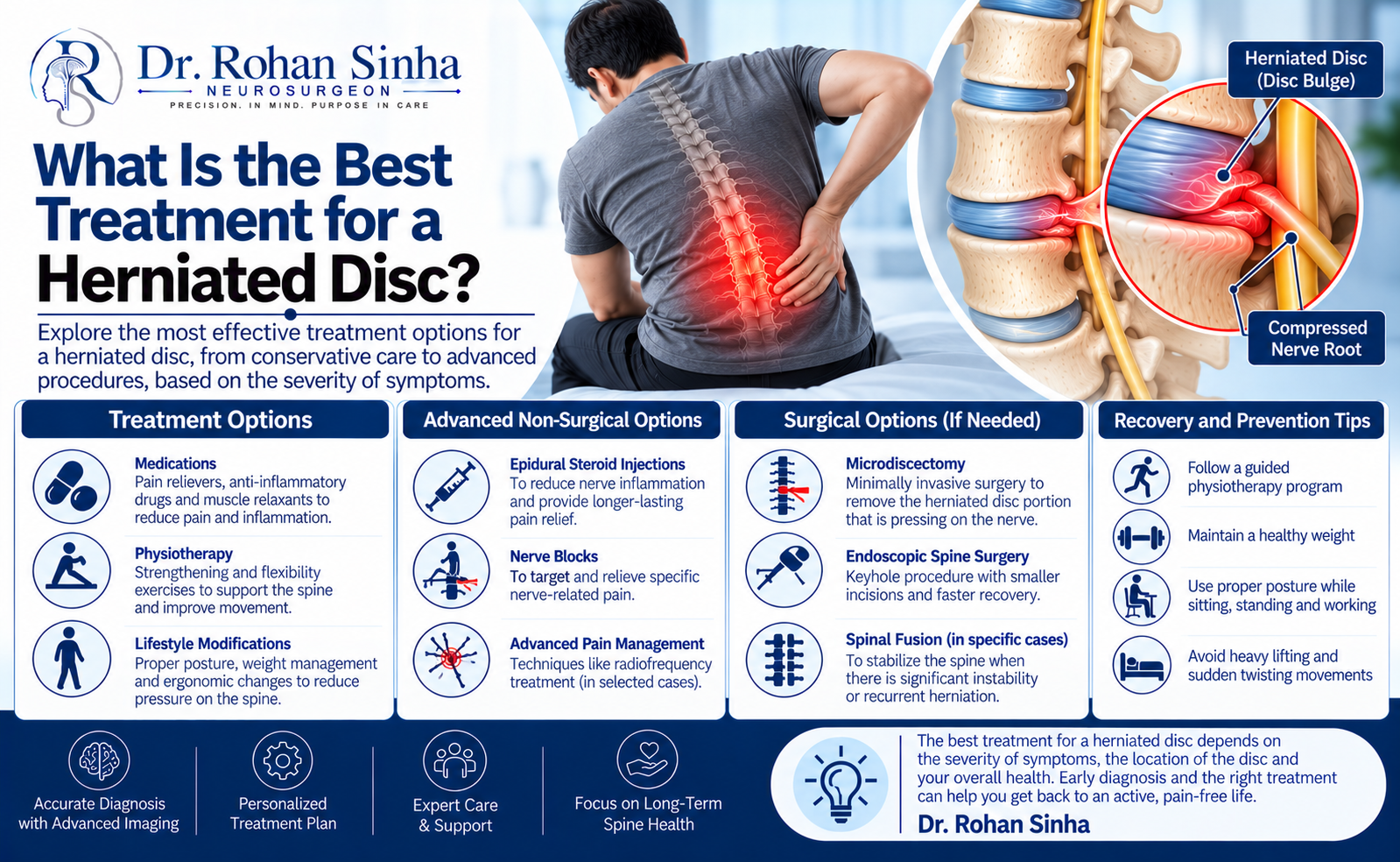
Conservative, non-surgical care is the best and most effective first-line treatment for the vast majority of herniated discs, with up to 90% of patients recovering without surgery over time.
What Is a Herniated Disc?
There are soft discs that are cushion-like structures present between the vertebrae in the spine. They work in order to take shock.
A herniated disc is one where the soft internal material breaks through the degenerated or torn outer layer of the disc. If it irritates or presses against the adjacent nerve, it will lead to a number of symptoms like pain, numbness, tingling or weakness.
The disc bulge and herniated disc have some similarities as well as differences. The former protrudes from its normal position while the latter one is one where the soft internal material breaches the degenerated or torn outer layer.
What Are the Common Herniated Disc Symptoms?
These depend on the location of the disc and whether any nerve roots are affected.
Symptoms of a Herniated Disc in the Lower Back
Symptoms of a herniated disc in the lower back include:
-
Back pain
-
Pain radiating down to the buttocks or leg, known as sciatica
-
Numbness or tingling sensation in the legs and feet
-
Weakened muscles
Symptoms of a Bulging Disc in the Neck
Symptoms of a bulging disc in the neck include:
-
Neck pain or stiffness
-
Pain extending to the shoulder, arm or fingers
-
Numbness or tingling sensation in the hands
-
Weakness in arms and hands
Some individuals may have changes in the discs seen on MRI scans but do not experience any symptoms. Thus, treatment must take into account the physical examination and symptoms, not only the findings of the scan.
What Is the Best Treatment for a Herniated Disc?
There is no one solution that can help everybody. In most situations, physicians advise conservative treatment as the initial step, especially if there is no progressive weakening or any neurological issues.
1. Medications for Relieving Pain
Physicians can prescribe analgesic or anti-inflammatory medications to alleviate pain. Muscle relaxant medication might be prescribed in some cases.
The selection of medications will depend on your medical background, other drugs that you are taking and your symptoms. Do not use medicines if you are not sure that they are right for you.
2. Physical Therapy
Physical therapy can help improve flexibility, strengthen the muscles supporting your spine and make daily movement easier.
A physiotherapist may create a personalised exercise plan based on the location of the herniated disc and your symptoms. Avoid exercises that significantly worsen pain, numbness or weakness.
3. Lifestyle Change
You have to avoid lifting heavy objects, excessive bending or twisting or performing other actions that lead to intensification of symptoms.
Rest may be useful during severe pain attacks; however, bed rest should not be prolonged because of increasing stiffness. Gentle physical activity, such as walking, is recommended by physicians.
4. Heat/Cold Pack
Heat or ice packs can offer some relief for pain and muscle aches temporarily. Use caution when using heat or ice packs and ensure that they don't come into contact with your skin for extended periods.
The above methods can help relieve the symptoms but cannot assure that the disc regains its original form.
5. Epidural Corticosteroids Injection
When pain persists even after the first treatment, a specialist may opt for an epidural corticosteroid injection or a nerve block. The injections are intended to alleviate the inflammation in the irritated nerves.
Not everyone can receive these injections. Consultation with specialists is vital before considering such treatment options.
Bulging Disc Treatment: Does Every Disc Bulge Need Surgery?
No. The presence of a disc bulge doesn’t necessarily imply that a person needs surgery because some people may suffer from bulging discs but have no associated pain or nerve issues.
The correct treatment of a bulging disc is based on the presence of pain, mobility issues, and/or nerve compression from the disc bulge. Possible treatments include:
-
No treatment if the disc bulge is asymptomatic
-
Medication for pain relief and inflammation
-
Physical therapy/exercises
-
Injections into the spine for the persistence of symptoms
-
Surgical intervention for some patients with continuous pain or nerve complications
A diagnosis based on MRI alone will not influence the choice of treatment plan.
Treatment for a Bulging Disc in the Back vs Neck
Therapy also varies based on the site of the spine injury.
Bulging Disc in Back
A bulging disc in the back can cause pain in the lower back region or radiating pain to one leg. The first course of treatment generally involves modifying activities and taking suitable medication and physiotherapy.
Should there be persistence of pain or presence of any numbness or weakness, the doctor can advise additional tests or treatment.
Bulging Disc in Neck
Bulging Disc in the neck can give rise to neck pain or shoulder pain or even symptoms that travel into arms and hands.
The treatment can include medications, exercises and injections in select cases. Severe arm weakness warrants a visit to a doctor immediately due to possible involvement of nerves and spinal cord.
When Is Surgery Needed for a Herniated Disc?
Surgery is never the first choice. Nonetheless, surgery may be considered when the non-surgical approach fails to give enough relief or when there are serious neurological issues that arise.
Surgical options may include situations where:
-
There is persistent severe pain despite adequate treatment
-
The pain greatly interferes with mobility and work activities
-
There is progressive muscle weakness
-
There is severe nerve or spinal cord pressure
-
Other treatments are not giving satisfactory results
One of the procedures includes microdiscectomy, whereby the portion of the disc is removed by the surgeon. The surgery method will depend on the location of the disc, the degree of compression and the overall health of the patient.
How Long Does a Herniated Disc Take to Heal?
In most of the situations where the disc herniation occurs in individuals, the issue gets solved by itself within a period of about four to six weeks following the correct conservative treatment.
The duration taken to do this depends on how serious the issue is and individual differences. Some may take long periods to recover, while others might need some further treatment to address the problem.
Why Choose Dr. Rohan Sinha?
A herniated disc requires an individualized treatment plan based on symptoms, examination findings, and the degree of nerve compression. Dr. Rohan Sinha focuses on the evaluation and management of neurological and spine-related conditions.
Assessment may include reviewing the patient's symptoms, medical history, neurological function, and relevant imaging. Treatment options can then be discussed according to the underlying condition, including conservative management and surgical approaches when clinically appropriate.
If you are looking for the Best Spine Specialist in Noida, a specialist evaluation can help you understand your treatment options and whether surgery may be necessary.
Related Treatments
Depending on the patient's condition, relevant services offered by Dr. Rohan Sinha include:
Related Articles
Conclusion
Treatment of a herniated disc will depend on the type of disc and symptoms it produces. In many cases, the use of medication, physiotherapy, and non-surgical methods can prove to be very effective, while in some cases, surgery will be required. If you have pain, numbness, or muscle weakness, you should get yourself assessed.
If you have any neck or back pain that is a result of a herniated disc, then you should visit Dr. Rohan Sinha, who is a neurosurgeon based in Noida.
Frequently Asked Questions
1. Which is the best treatment for a herniated disc?
Many times, the first method of treatment includes the use of non-surgical treatment like medications, activity changes and physiotherapy.
2. Will a herniated disc heal without surgery?
A herniated disc can heal even without the need for any surgical operation in many cases within four to six weeks.
3. Is there any difference between a bulged and herniated disc?
While a bulged disc means the disc protruding out of its position, herniation of a disc is when the interior part protrudes due to damage to its exterior.
4. What is the best treatment for a herniated disc in the neck region?
The best methods of treatment include the use of medicines, activity changes and physiotherapy. When the symptoms continue to worsen, then one should get examined by an expert.
5. At what point should surgery be considered for a herniated disc?
When the symptoms worsen in spite of proper non-surgical treatment, surgery can be considered. Loss of bladder/bowel control should be reported to a specialist immediately.