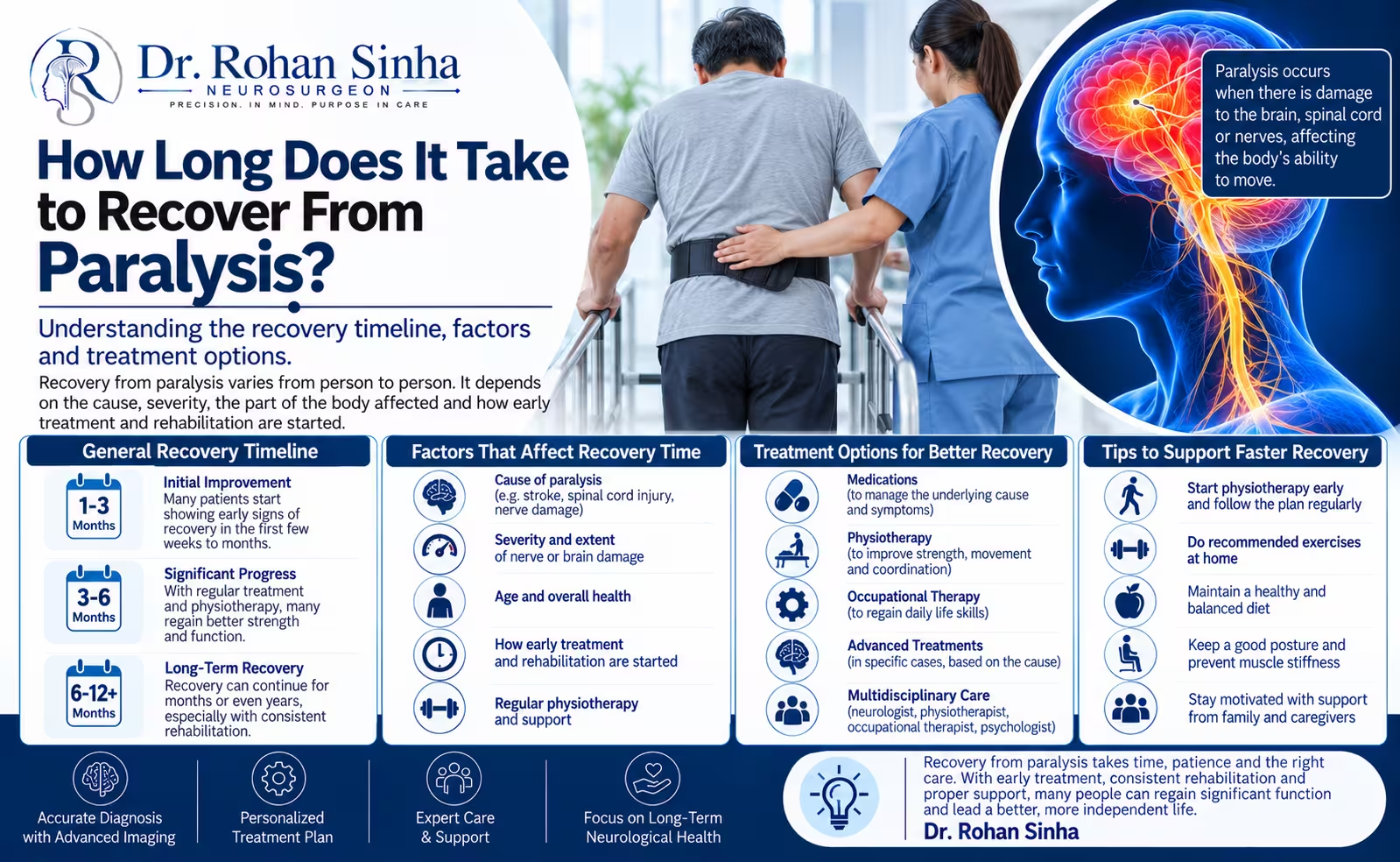
Recovery time from paralysis depends on the root cause, severity, and how quickly treatment begins, with most significant functional gains occurring within the first 3 to 6 months.
What Is Paralysis?
Paralysis refers to partial or total inability to move some of the muscles of the body due to either impairment or disease of the brain, spinal cord, or nerves responsible for sending signals controlling muscles.
It can be experienced in the face, arms, legs, or other parts of the body. Paralysis can either be temporary, reversible with medical help or become permanent depending on its cause. Some of the causes of paralysis include stroke, spinal injury, among others.
How Long Does It Take to Recover From Paralysis?
The recovery process from paralysis does not have any set time schedule. Some people recover in weeks or months, while others take a few years. There are instances in which one never fully recovers their normal mobility.
It all depends upon various factors including:
-
Cause of paralysis: It makes a difference whether it is because of stroke, spinal cord injury or a problem with nerves.
-
Nerve damage: How badly have the nerves been damaged?
-
Prompt treatment: Early treatment of the underlying disorder.
-
Health factor: It includes age and other physical ailments.
-
Rehabilitation: The rehabilitation process can make movement and mobility possible.
A doctor will be able to make an estimate about a person's recovery after examining his/her situation.
What Are the Symptoms of Paralysis?
In some individuals, paralysis symptoms lead to complete immobility, whereas in others, there is partial mobility or reduced muscle strength.
Paralysis symptoms include:
-
Inability to move one's arm, leg, or any other part of the body
-
Weakness or reduction in muscle strength
-
Numbness or loss of feeling
-
Tingling in the arms or legs
-
Muscle stiffness, cramps and spasms
-
Difficulties with walking and balance
Other problems related to speech and breathing difficulties might be present in some individuals, based on their underlying condition.
What Happens During a Paralysis Attack?
A paralysis attack refers to a medical emergency where the patient experiences symptoms of paralysis or extreme weakness. It is not a medical condition or diagnosis per se and describes a range of medical emergencies that lead to such symptoms appearing.
Sudden onset of paralysis can happen when a person suffers a stroke or an accident involving brain injury. The first symptoms may manifest themselves in form of droopy face, weak side of the body, speech problems and impaired coordination.
In case of sudden paralysis or similar symptoms of a stroke, dial emergency numbers immediately. You shouldn’t wait if the symptoms go away on their own or not.
What Are the Treatment Options for Paralysis?
It is important to establish the root cause of paralysis to determine the best course of treatment. Diagnosis is the first step that needs to be undertaken before moving forward into treatment.
1. Treatment for Root Cause of Paralysis
Depending on the root cause of paralysis – stroke, spinal cord injury, nerve damage or other neurological disorders – different treatment methods will be recommended by the doctor.
2. Physical Therapy
Physical therapy includes activities aimed at developing mobility, strength, flexibility and balance of the individual. A physiotherapist will design a program of physical activity according to the abilities of the patient.
3. Occupational Therapy
Occupational therapy helps patients practise everyday activities, such as dressing, eating and personal care. It can support greater independence even when complete movement recovery is not possible.
4. Medicine and Treatment of Symptoms
Based on the root cause of paralysis, medication might aid in alleviating muscle rigidity, spasms, pain, and any other symptoms. Although medication might not treat paralysis, it will enhance the patient's life.
5. Adaptive Devices
There are devices such as wheelchairs, braces, and walkers among others that will assist the patient to move around easily and conduct their activities.
Can Paralysis Be Reversed Completely?
On some occasions, it may be possible for the paralysis to show improvement or even heal, especially if the root cause of the condition is treatable. There are some temporary types of paralysis of the face that could get better with time.
However, paralysis resulting from serious or permanent damage to the brain and spinal cord would not be fully reversible. It may happen that some individuals would be able to recover their movements partially while others adjust to their situation.
It should be noted that sometimes healing does not necessarily lead to full recovery.
How Can Rehabilitation Help With Paralysis Recovery?
Rehabilitation will be essential in allowing patients to take advantage of their maximum potential to recover. The rehabilitation process can consist of:
-
Physical therapy and movement exercises
-
Occupational therapy
-
Swallowing therapy
-
Prevention of the complications linked to restricted movement
-
Psychological support for both the patient and family
The rehabilitation program must be modified according to the patient’s needs. Patients are advised to adhere to professional recommendations instead of practicing difficult exercises independently.
When Should You Seek Medical Help?
Paralysis always requires medical evaluation, particularly when it develops suddenly. Seek emergency care if you notice:
-
Sudden weakness or inability to move an arm or leg
-
Facial drooping or difficulty speaking
-
Sudden loss of balance or coordination
-
New paralysis after a head, neck or spinal injury
-
Difficulty breathing or swallowing
Do not move someone unnecessarily if a serious spinal injury is suspected. Call emergency services and follow their instructions.
Why Choose Dr. Rohan Sinha?
Paralysis can have several underlying causes, making accurate diagnosis and timely treatment important. Dr. Rohan Sinha focuses on the evaluation and management of neurological and spine-related conditions.
Assessment may involve understanding the patient's symptoms, reviewing medical history, performing a neurological examination, and recommending appropriate investigations. When a brain or spinal condition requires specialist treatment, the available options depend on the diagnosis, severity, and overall health of the patient.
For patients looking for the Best Neurosurgeon in Noida, a specialist evaluation can help identify relevant brain or spine conditions and guide decisions about further treatment.
Related Treatments
Depending on the underlying cause, relevant services offered by Dr. Rohan Sinha include:
Related Articles
- When Does a Brain Tumor Require Surgery?
- L4-L5 Slip Disc: Symptoms and Treatment Options
- Back Pain That Goes Down the Leg: Causes and Treatment
- What Causes Numbness and Tingling in Hands and Feet?
- Can a Slipped Disc Heal Without Surgery?
Conclusion
Paralysis recovery differs from patient to patient and relies on various factors such as the reason behind paralysis, extent of nerve damage, and effectiveness of treatment. While some people recover by regaining their mobility, others can gain by going through rehabilitation and other forms of support. It is important to identify the symptoms in order to seek immediate medical assistance especially if the paralysis occurs abruptly. If you or your loved one has been suffering from paralysis or other neurological symptoms, you should see Dr. Rohan, one of the best neurosurgeons in Noida.
Frequently Asked Questions (FAQs)
1. How much time does one need to recover from paralysis?
It will depend on various factors, such as its cause and gravity. It may take days, weeks or even more. People can either recover their ability to move or suffer from limitations for the rest of their lives. A specialist will be able to give you an answer regarding your particular case.
2. Is paralysis always long-lasting?
No. Paralysis can be temporary, but there are cases when the nervous system gets permanently damaged and one may never recover from it.
3. Can a person walk again after paralysis?
There are people who managed to restore their mobility thanks to treatment and rehabilitation. There is a chance that they will be able to walk again, but it depends on numerous factors.
4. What treatment is the most effective one for paralysis?
It will depend on your particular situation. There may be various ways of dealing with this issue.
5. Can paralysis be cured completely?
Yes, but not in all cases. It will depend on the nature of this problem and how severely the nervous system was affected by it.