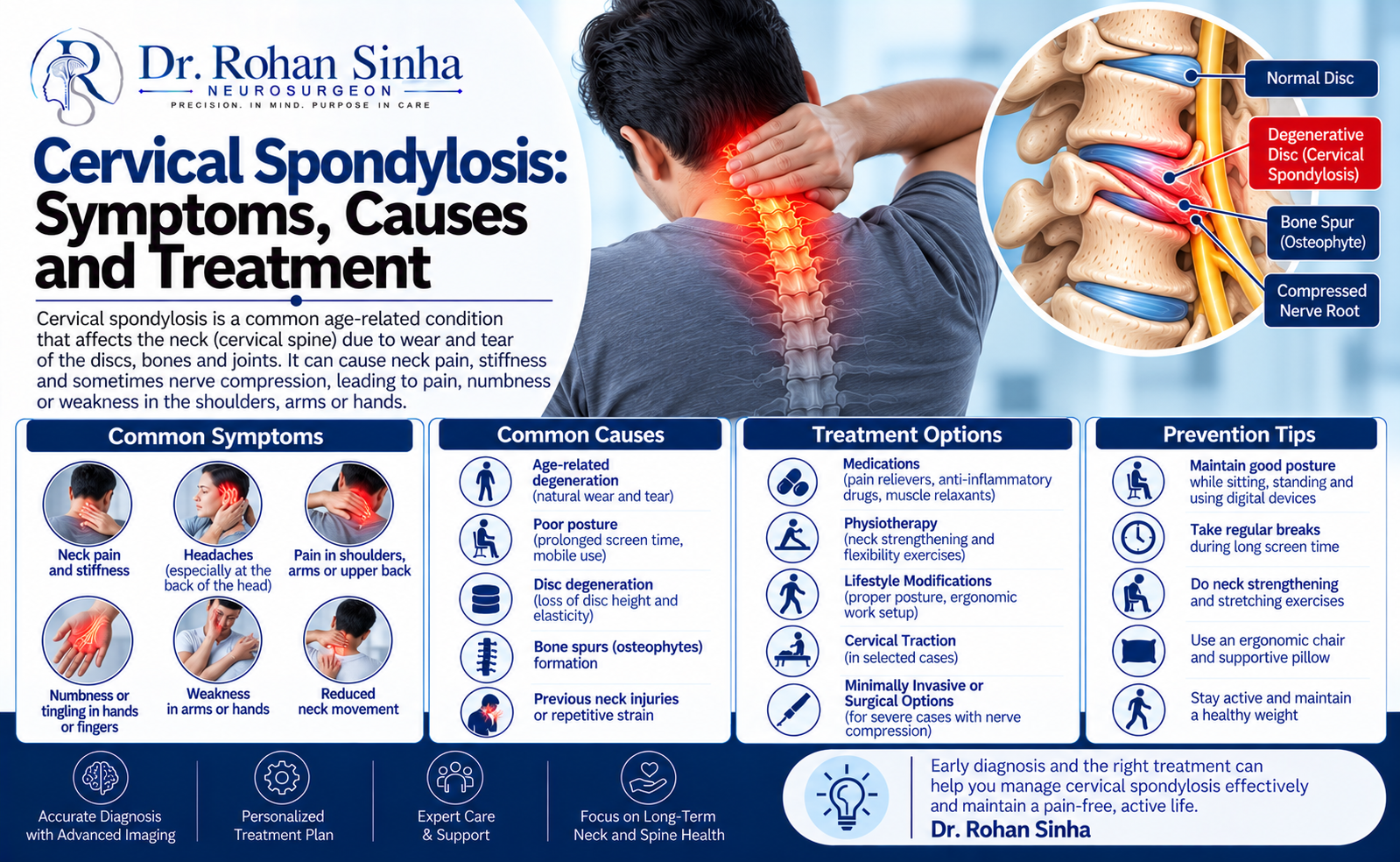
Cervical spondylosis is a common, age-related wear-and-tear condition affecting the discs, bones, and joints of the neck (cervical spine).
What Is Cervical Spondylosis?
Cervical Spondylosis is basically an abnormal degeneration that occurs in the cervical spine over the aging process. The cervical spine comprises seven vertebral bodies in the neck region. The discs that exist between these vertebrae play an important role in pressure absorption and movement.
In later life, there are chances for disc dehydration, joint changes and even formation of osteophytes which in certain instances can reduce the space where the nerves and spinal cords run through.
All individuals who suffer from cervical spondylosis do not necessarily exhibit any symptoms.
What Are the Symptoms of Cervical Spondylosis?
There are numerous factors that contribute to varying symptoms. The symptoms are determined by the particular structure affected and the severity of the disease.
1. Neck Pain and Stiffness
It is another common symptom of the disease. Sometimes the pain appears after extended periods spent sitting, bending to check one's smartphone, or keeping one particular position too long.
Some patients suffer from decreased range of motion of the neck or discomfort when turning their heads.
2. Shoulder and Arm Pain
In case the cervical nerves get irritated or pressed, there may be pain in the shoulder, arm, or hand which may be a sign of cervical radiculopathy.
3. Numbness and Tingling
Another symptom caused by the nerve pressure may be pins-and-needle sensation, numbness, and burning of the arm or finger which needs to be addressed.
4. Muscle Weakness
Sometimes the weakness of the arm or hand develops which affects ability to grasp things or do certain tasks.
5. Problems With Balance and Walking
Cervical myelopathy is developed in case the spinal cord gets compressed by the cervical spondylosis. As a result, a patient may have problems with walking, loss of balance, clumsiness of hands, or weakness in his arms or legs.
What Causes Cervical Spondylosis?
Cervical spondylosis usually develops slowly over time.
-
Age‑related wear and tear: Cervical spondylosis can occur when discs and joints change naturally as we age.
-
Disc degeneration: Cervical spondylosis can happen when discs lose water and become less flexible.
-
Bone spurs: Cervical spondylosis can be linked to bone growth that forms around spinal joints.
-
Previous neck injuries: Cervical spondylosis can be made worse by earlier injuries that cause degenerative changes.
-
Strain: Cervical spondylosis can flare up when certain work activities or repeated neck movements put pressure on the spine.
-
Prolonged poor posture: Cervical spondylosis can feel worse when we keep bad positions for a long time but posture alone does not explain every case of cervical spondylosis.
How Is Cervical Spondylosis Diagnosed?
Diagnosis starts with reviewing symptoms and medical history then a physical and neurological examination. Diagnosis will continue with steps to clarify the problem.
A doctor will assess neck movement, muscle strength, sensation, reflexes and coordination. The doctor looks at each of these areas to understand the condition.
Depending on the findings investigations may include:
-
X‑ray: May show changes in the bones and alignment of the spine.
-
MRI: Can help evaluate discs, nerves and the spinal cord especially when neurological symptoms are present.
-
CT scan: May provide information about bony changes in selected cases.
Not every patient with neck pain needs an MRI. The decision to use an MRI depends on the symptoms the findings, from the examination and whether there are signs of nerve or spinal cord involvement.
What Is the Best Treatment for Cervical Spondylosis?
Treatment depends on the severity of symptoms and whether nerves or the spinal cord are affected. Many people with spondylosis who do not have serious neurological problems can be managed without surgery.
1. Medication
A doctor may recommend medication to help manage pain or inflammation. The appropriate choice depends on the patient’s history and other health conditions. Medication may relieve symptoms. Does not reverse all age‑related changes in the spine.
2. Physiotherapy
Physiotherapy may help improve neck mobility strengthen supporting muscles and reduce discomfort. A physiotherapist can recommend exercises according to the patient’s condition. Avoid neck manipulation or exercises that worsen pain, tingling or weakness without professional guidance.
3. Posture and Activity Modification
Small changes in habits may help reduce neck strain. These can include:
-
Taking breaks from prolonged screen use
-
Keeping screens at a viewing height
-
Avoiding sustained awkward neck positions
-
Adjusting the workstation for comfort
-
Maintaining regular appropriate physical activity
These measures may help manage symptoms although they do not eliminate the underlying degenerative changes of cervical spondylosis.
4. Regular Medical Monitoring
If symptoms are mild and there is no nerve or spinal cord involvement a doctor may recommend conservative treatment and follow‑up. New or worsening numbness, weakness, hand clumsiness or balance problems should be reassessed promptly.
5. Surgery
Surgery may be considered when cervical spondylosis causes nerve compression, spinal cord compression, progressive neurological deficits or persistent disabling symptoms despite appropriate non‑surgical treatment. The procedure depends on the location and nature of the compression. Surgery is not necessary for everyone, with spondylosis.
Seek medical assessment if you develop new difficulty walking, rapidly worsening weakness or loss of coordination. Sudden weakness accompanied by drooping or difficulty speaking may indicate a stroke and requires emergency care.
Can Cervical Spondylosis Be Prevented?
Age-related changes, in the spine can't always be stopped.. Some daily habits can help keep the neck healthy and make pain easier to handle.
Good things to do include:
-
Staying active and moving around
-
Doing exercises that build strength in the neck
-
Taking breaks often if you sit for a time
-
Keeping your work area set up in a way that feels good
-
Not smoking
-
Going to a doctor if symptoms last a long time
These steps might help keep things working better and make strain less but they can't promise to stop cervical spondylosis from happening.
Why Choose Dr. Rohan Sinha?
Cervical spondylosis can range from neck discomfort to conditions that involve nerve or spinal cord compression. Accurate assessment of spondylosis helps determine how severe the problem is and whether conservative treatment or further intervention is appropriate. I know how uncomfortable it can feel when neck pain lingers.
Dr. Rohan Sinha focuses on the evaluation and management of spine conditions. Assessment may include reviewing symptoms examining function and recommending appropriate investigations when needed. Treatment decisions are based on the patients findings and individual needs. I appreciate how important it is to have an assessment.
If you are looking the Best spine specialist in Noida a specialist evaluation can help identify the cause of neck pain arm tingling, numbness or weakness and guide appropriate treatment. I am here to help you find the care.
Related Treatments
Depending on the patient's symptoms and diagnosis, relevant services offered by Dr. Rohan Sinha include:
Related Articles
Frequently Asked Questions
1. What is the main cause of cervical spondylosis?
The most common cause is age-related wear and tear affecting the discs, bones, and joints of the neck. Previous injuries and other factors may also contribute.
2. What are the early symptoms of cervical spondylosis?
Early symptoms may include neck pain, stiffness, and reduced neck movement. Some people also experience pain extending into the shoulders or arms.
3. Can cervical spondylosis be cured without surgery?
Many people manage their symptoms without surgery through medication, physiotherapy, and activity modification. However, degenerative changes may remain, and treatment aims to improve symptoms and function.
4. Can cervical spondylosis cause numbness in the hands?
Yes. If cervical nerves are compressed or irritated, symptoms may include tingling, numbness, pain, or weakness in the arms and hands.
5. Is cervical spondylosis a serious condition?
It can be mild in some people, but it may become serious if it causes spinal cord compression. Difficulty walking, hand clumsiness, or progressive weakness requires prompt medical evaluation.
6. Is an MRI necessary for cervical spondylosis?
Not always. An MRI may be recommended when symptoms suggest nerve or spinal cord compression, when neurological deficits are present, or when the diagnosis requires further investigation.
7. When does cervical spondylosis require surgery?
Surgery may be considered when there is significant spinal cord or nerve compression, progressive weakness, or persistent disabling symptoms despite appropriate treatment.
8. Which doctor should I consult for cervical spondylosis?
A qualified spine specialist, neurologist, or neurosurgeon may evaluate the condition depending on the symptoms. A neurosurgeon may be particularly relevant when nerve or spinal cord compression requires surgical assessment.
Conclusion
Cervical spondylosis is a condition that causes age‑related changes, in the neck. Cervical spondylosis can bring neck pain, stiffness, arm pain, numbness and weakness. Many people feel better when cervical spondylosis is treated with methods but surgery may be needed for some people when cervical spondylosis causes serious nerve or spinal cord compression.
If cervical spondylosis symptoms keep going they should be evaluated of ignored. Early assessment of spondylosis can help find complications and guide the right treatment plan.