What Is a Slipped Disc?
The spine is made up of individual bones called vertebrae, with soft discs positioned between them. These discs help absorb shock and allow the spine to move.
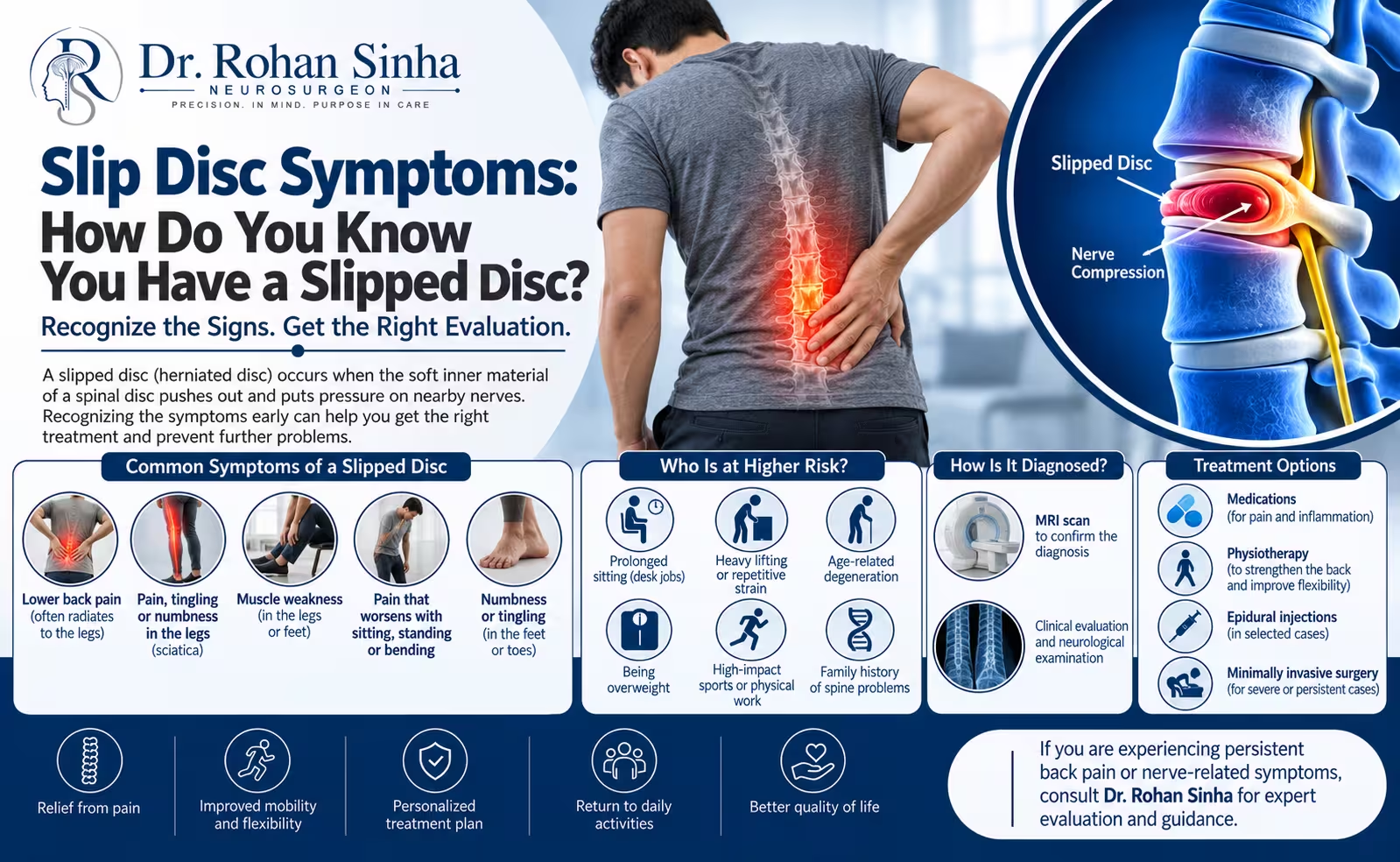
A slipped disc, also called a herniated disc, occurs when the inner material of a spinal disc pushes through a weakened or damaged outer layer. If the displaced disc material irritates or compresses a nearby nerve, it can cause pain and neurological symptoms.
A slipped disc can occur in different parts of the spine, but it is particularly common in the lower back.
What Are the Common Symptoms of a Slipped Disc?
Symptoms depend on the location of the affected disc and whether a nearby nerve is being compressed.
Common symptoms include:
1. Lower Back Pain
A slipped disc in the lower back may cause pain around the lumbar region.
The pain may:
- Begin suddenly or gradually
- Become worse with certain movements
- Increase with coughing, sneezing, or straining in some cases
- Make sitting, standing, or bending uncomfortable
Lower back pain by itself does not prove that you have a slipped disc because many different conditions can cause back pain.
2. Pain That Travels Down the Leg
One of the more characteristic symptoms of a lower-back slipped disc is pain that travels from the back or buttock into the leg.
This nerve-related pain is commonly referred to as sciatica.
The pain may feel:
- Sharp
- Burning
- Shooting
- Electric-like
- Severe or persistent
A slipped disc can irritate a nerve and cause back pain along with leg pain, particularly when the disc is pressing on a nerve root.
3. Tingling or Pins and Needles
Nerve irritation can cause abnormal sensations such as tingling or a pins-and-needles feeling.
These sensations may occur in:
- The buttock
- Thigh
- Calf
- Foot
- Toes
The exact location depends on which nerve is affected.
4. Numbness
Some people with nerve compression experience reduced sensation or numbness in part of the leg or foot.
Numbness may be constant or may come and go.
If numbness is persistent, worsening, or accompanied by weakness, it is important to seek medical evaluation.
5. Muscle Weakness
A more significant nerve compression can sometimes affect muscle strength.
You may notice:
- Difficulty lifting the foot
- Trouble standing on your toes or heels
- Difficulty climbing stairs
- A leg feeling weaker than the other
- Difficulty performing movements that were previously easy
Weakness is an important neurological symptom and should be properly assessed.
6. Pain That Gets Worse With Certain Movements
A slipped disc may produce pain with activities such as:
- Bending forward
- Lifting
- Twisting
- Sitting for long periods
- Getting up from a chair
However, the movement that aggravates symptoms can vary between patients.
7. Back and Leg Symptoms on the Same Side
When a disc compresses a nerve root, symptoms may follow a particular pattern into the buttock and leg.
For some people, the back pain may be less prominent than the leg pain.
This pattern can provide useful clues during a clinical examination, although symptoms alone cannot establish a diagnosis.
Does Everyone With a Slipped Disc Have Back Pain?
No.
Some people with a herniated disc may have little or no pain, particularly if the disc is not irritating a nearby nerve.
A disc abnormality seen on an MRI does not automatically mean that it is responsible for a person's symptoms. Imaging findings can occur in people who have no symptoms, which is one reason clinical examination and the patient's symptoms are important when making a diagnosis.
How Is a Slipped Disc Diagnosed?
Diagnosis usually starts with a detailed medical history and physical examination.
A doctor may assess:
- Where the pain begins
- Whether pain travels into the leg
- Sensation in the legs
- Muscle strength
- Reflexes
- Walking and movement
- Symptoms that worsen or relieve the pain
MRI Scan
An MRI may be recommended when there is a need to evaluate the spine and nerve structures in greater detail, particularly when the findings are likely to influence treatment.
Routine imaging is not recommended for every person with lower back pain or sciatica. Imaging is generally considered when there is suspicion of a more serious condition or when the result may change management.
What Causes a Slipped Disc?
A slipped disc may develop when the outer part of a disc becomes weaker or damaged and the inner material pushes outward.
Possible contributing factors include:
- Age-related disc changes
- Repetitive lifting
- Sudden or improper lifting
- Repetitive twisting movements
- Physical strain
- Certain occupational activities
- Injury or trauma
The risk can increase as the spinal discs undergo gradual structural changes over time.
Who Is More Likely to Develop a Slipped Disc?
A slipped disc can affect different age groups, although disc-related problems may become more likely as the discs undergo age-related changes.
Factors that may contribute include:
- Repetitive physical work
- Frequent heavy lifting
- Poor lifting technique
- Repeated twisting
- Being physically inactive
- Previous back problems
- Certain sports or occupational activities
Having one of these factors does not mean a slipped disc will definitely develop.
Is a Slipped Disc the Same as Sciatica?
Not exactly.
A slipped disc describes a problem involving a spinal disc.
Sciatica describes a pattern of pain caused by irritation or compression of the sciatic nerve or its contributing nerve roots.
A slipped disc can cause sciatica when the disc presses on a relevant nerve root, but sciatica can also have other causes.
Can a Slipped Disc Heal Without Surgery?
In many cases, treatment begins without surgery.
Depending on the symptoms and diagnosis, non-surgical management may include:
- Staying active within comfortable limits
- Exercise-based treatment
- Physical therapy
- Pain management
- Other medications when appropriate
- Specialist evaluation when symptoms persist or worsen
NICE guidance recommends appropriate self-management and staying active for many people with low back pain and sciatica.
The right treatment depends on the individual's symptoms and clinical findings.
When Is Surgery Considered for a Slipped Disc?
Most people with a slipped disc do not automatically need surgery.
Surgical treatment may be considered when there is significant nerve compression, persistent disabling symptoms, or when appropriate non-surgical treatment has not adequately improved pain or function.
For patients with sciatica, NICE recommends considering spinal decompression when non-surgical treatment has not improved pain or function and radiological findings are consistent with the symptoms.
The decision should be based on the complete clinical picture rather than an MRI report alone.
When Should You See a Doctor for a Slipped Disc?
You should consider medical evaluation if:
- Back pain persists or keeps returning
- Pain travels down the leg
- You develop numbness or tingling
- You notice weakness in the leg or foot
- Pain is affecting sleep or everyday activities
- Symptoms are getting worse instead of improving
Early evaluation can help identify whether the symptoms are related to a slipped disc, another spinal condition, or a different cause of pain.
Warning Signs That Need Urgent Medical Attention
Some symptoms associated with back pain and nerve compression require urgent assessment.
These include:
- New loss of bladder control
- New loss of bowel control
- Difficulty passing urine
- Numbness around the groin, genitals, or anal region
- Severe or rapidly worsening weakness in the legs
- Significant neurological deterioration
These symptoms can indicate severe nerve compression, including cauda equina syndrome, and should not be ignored.
How Is a Slipped Disc Treated?
Treatment depends on the severity and nature of the symptoms.
Conservative Treatment
For many patients, treatment may initially involve activity modification, exercise-based care, physical therapy, and appropriate pain management.
The goal is to reduce symptoms while helping the person gradually return to normal activities.
Specialist Treatment
When symptoms persist, worsen, or involve neurological deficits, a specialist may evaluate whether further investigations or a different treatment approach is required.
Surgical Treatment
In selected cases, surgery may be recommended to relieve pressure on an affected nerve.
Depending on the patient's condition and the location of the disc problem, different surgical techniques may be considered. Endoscopic lumbar discectomy is one minimally invasive approach used in selected patients with sciatica related to a herniated disc.
The suitability of any procedure depends on the patient's diagnosis and clinical findings.
Why Choose Dr. Rohan Sinha for Spine Care in Noida?
When symptoms such as persistent back pain, leg pain, numbness, or weakness suggest a possible disc or nerve-related problem, a detailed evaluation by an experienced spine and neurosurgical specialist can help identify the underlying cause. Dr. Rohan Sinha, Best Neurosurgeon & Spine Specialist in Noida, provides specialized care for spinal and neurological conditions with an emphasis on individual assessment and treatment planning.
Treatment for a slipped disc depends on the severity of symptoms, the presence of nerve compression, neurological findings, and the patient's response to non-surgical care. Dr. Rohan Sinha evaluates the patient's symptoms, physical findings, medical history, and relevant imaging to help determine the most appropriate treatment approach.
If you have persistent back pain, pain extending into the leg, numbness, tingling, or weakness, timely consultation with a spine specialist can help clarify the cause of your symptoms and guide the next steps in treatment.
Related Treatments
- Back Pain Treatment
- Slip Disc Treatment
- Herniated Disc Treatment
- Lumbar Spondylosis Treatment
- Spinal Stenosis Treatment
Related Articles
- Neck Pain: Symptoms, Causes & When to See a Doctor
- Brain Tumour Warning Signs: Symptoms That Need Medical Evaluation
- Lower Back Pain: Common Causes and Treatment Options
- Brain Tumor Symptoms: 10 Early Warning Signs
- When Does a Brain Tumor Require Surgery?
Conclusion
A slipped disc can cause lower back pain, pain travelling into the leg, tingling, numbness, or weakness when the affected disc irritates or compresses a nearby nerve. However, these symptoms can also occur with other spinal conditions, so they should not be used to self-diagnose a slipped disc.
A proper clinical evaluation can help determine whether the symptoms are related to a herniated disc and whether imaging or specialist treatment is required.
Many people can initially be managed without surgery, but persistent or severe symptoms, particularly those involving significant nerve compression or weakness, may require specialist assessment.
If you develop bladder or bowel problems, numbness around the groin or anal region, or rapidly worsening weakness, seek urgent medical attention.
Frequently Asked Questions
1. What are the most common symptoms of a slipped disc?
Common symptoms can include lower back pain, pain travelling into the leg, tingling, numbness, and weakness when a nearby nerve is affected.
2. How do I know if my back pain is caused by a slipped disc?
Back pain alone cannot confirm a slipped disc. Symptoms such as pain travelling into the leg, numbness, tingling, or weakness may suggest nerve involvement, but a proper medical evaluation is needed to determine the cause.
3. Can a slipped disc cause pain in the leg?
Yes. When a herniated disc compresses or irritates a nerve, it can cause pain that travels from the lower back or buttock into the leg, commonly known as sciatica.
4. Can a slipped disc cause numbness and weakness?
Yes. Nerve compression caused by a slipped disc can result in numbness, altered sensation, or weakness in the leg or foot.
5. Do all slipped discs need surgery?
No. Many people are initially treated with non-surgical approaches. Surgery may be considered when symptoms are severe or persistent and appropriate non-surgical treatment has not provided sufficient improvement, particularly when nerve compression is present.
6. Is an MRI always needed for a slipped disc?
No. Imaging is not routinely required for uncomplicated low back pain or sciatica. MRI may be considered when the findings are likely to change treatment or when a more serious underlying condition needs to be investigated.
7. Can a slipped disc get better without surgery?
Yes. Treatment often starts conservatively, depending on the individual's symptoms and diagnosis. Staying active, appropriate exercise, physical therapy, and medical management may be part of treatment.
8. When is a slipped disc an emergency?
Seek urgent medical attention if back or leg symptoms are accompanied by new bladder or bowel problems, difficulty passing urine, numbness around the groin or anal region, or rapidly worsening weakness in the legs.